
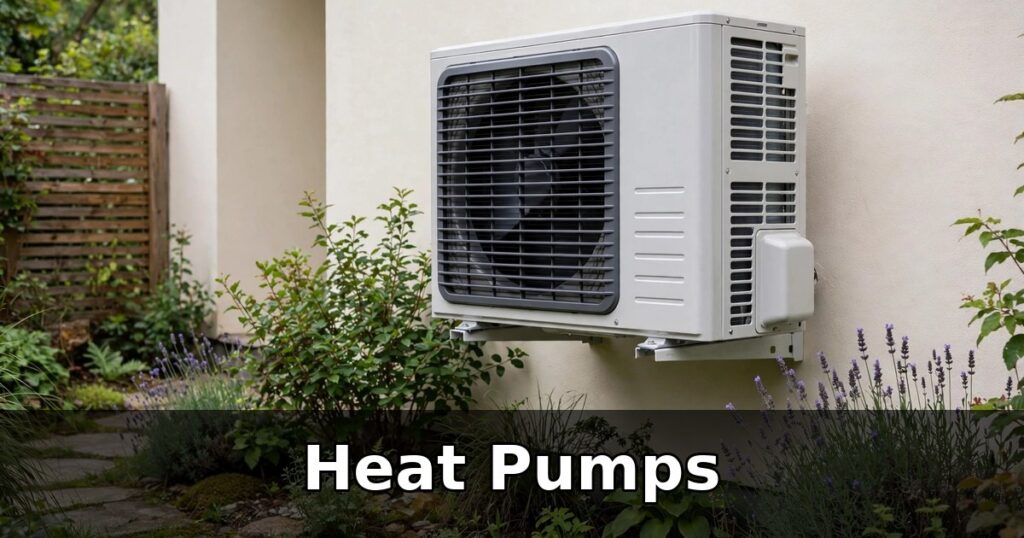
Heat Pumps: The Quiet Technology Replacing Gas Boilers
Heat pumps rarely make headlines. They do not roar, they do not flame, and they look, from the outside, much like an air-conditioning unit. Yet they are quietly becoming one of the most important…
Key points
- Global heat pump sales fell by about 2 percent in 2025, but Europe grew by 11 percent — its first year of growth since 2022.
- Germany was the driver: sales in the first half of the year rose 55 percent, and 2025 was the first year heat pumps outsold gas boilers there.
- In the United States, sales fell by about 13 percent in 2025; in France, Europe’s largest heat pump market, sales declined moderately.
- Heat pumps avoided approximately 53 billion cubic metres of gas consumption for building heating across Europe, Japan, and China in 2025, according to IEA estimates.
- The IEA’s Net Zero by 2050 roadmap set a pathway in which the global heat pump stock rises from 180 million units in 2020 to 600 million in 2030 — a path sales in 2025 were not following automatically.
Heat pumps rarely make headlines. They do not roar, they do not flame, and they look, from the outside, much like an air-conditioning unit. Yet they are quietly becoming one of the most important technologies in the effort to clean up heating, which accounts for a large share of energy use in homes and buildings in cold and temperate climates. A heat pump does not create heat by burning fuel. It moves heat from outside air, ground, or water into a building, using electricity to do the moving. Because moving heat can be far more efficient than creating it, a well-installed heat pump can deliver several units of heat for each unit of electricity it consumes.
That efficiency, combined with cleaner electricity, is why heat pumps feature so prominently in climate plans, even though their sales have not risen in a straight line. The recent history of heat pumps is a reminder that clean technology does not spread on technical merit alone. Prices, policies, installer availability, housing construction, and the relative cost of electricity and gas all shape whether households choose a heat pump or stick with a familiar boiler. Europe’s experience in 2025 illustrates both the promise and the unevenness: a recovery in one region, a decline in another, and a symbolic crossing point in Germany that suggests change can happen quickly when conditions align.
A European recovery, led by Germany
According to the International Energy Agency’s Global Energy Review 2026, global heat pump sales fell by about 2 percent in 2025. Sales in China and Japan were largely flat, while Europe saw a strong return of demand. Sales in the United States declined. In Europe, annual sales rose by 11 percent, marking the first year of growth since 2022. This recovery was largely driven by Germany, where sales in the first half of the year increased by 55 percent. It was also the first year that heat pumps outsold gas boilers in Germany.
That German milestone matters for reasons beyond sales figures. Germany has long been a gas-heating country, with a large installed base of boilers, a strong manufacturing sector, and a heating market shaped by building regulations, subsidies, and energy prices. For heat pumps to outsell gas boilers there for a full year suggests a shift in installer practice, consumer confidence, and market structure, not merely a one-month spike. It does not mean gas boilers have disappeared, nor that every new heating system in Germany is now a heat pump. It does mean that, in the largest economy in Europe, the default choice for many new installations is changing.
The IEA also reported that, in the United States, heat pump sales fell by about 13 percent in 2025, with several factors contributing, including refrigerant changes, shortages, and weaker housing construction. In France, Europe’s largest heat pump market, sales declined moderately, even as Europe as a whole grew. The contrast is instructive. A global or even regional average can hide divergent national stories, driven by local policy, housing markets, and supply chains. Anyone who claims heat pumps are either booming everywhere or failing everywhere is missing that variation.
How a heat pump actually works
A heat pump works on the same principle as a refrigerator, but in reverse. A refrigerator moves heat out of a cold box into a warmer room. A heat pump moves heat from cold outside air, or from the ground or water, into a warmer building. It does this by circulating a refrigerant that evaporates at low temperature, absorbing heat, then compressing it to a higher temperature, releasing heat inside, and expanding again to repeat the cycle. Because the system moves heat rather than generating it by combustion, it can deliver more heat energy than the electrical energy it consumes. The ratio is often called the coefficient of performance, and it varies with outdoor temperature, system design, and installation quality. In mild conditions, it can be high. In very cold conditions, it falls, but modern cold-climate heat pumps are designed to operate efficiently well below freezing, a point that surprises many people who assume they only work in mild climates.
There are several types. Air-source heat pumps, the most common for homes, extract heat from outside air. Ground-source, or geothermal, heat pumps extract heat from the ground via buried loops, where temperatures are more stable year-round, but installation is more disruptive and expensive. Water-source systems use a nearby water body or aquifer. Within homes, heat pumps can provide space heating, cooling in summer, and hot water, sometimes through a single system. Reversible air conditioners, which the IEA notes make up about half the Chinese heat pump market and are used as primary heating equipment, blur the line between cooling and heating, and are common in regions where cooling demand is also high.
A heat pump is not automatically a low-carbon device in isolation. Its climate benefit depends on the electricity that powers it, on its efficiency in real-world conditions, and on the refrigerant it uses, because some refrigerants are themselves potent greenhouse gases if they leak. A heat pump powered by coal-heavy electricity and installed poorly may offer only a modest benefit over a modern gas boiler, while the same technology powered by cleaner electricity and installed well can cut heating emissions substantially. That dependence is not a flaw unique to heat pumps. It is true of electric vehicles and other electrified technologies as well. It does mean that heat pump policy and electricity policy must advance together.
Why gas boilers have been so hard to displace
Gas boilers have several advantages that explain their persistence. They are familiar to installers and homeowners, they provide high-temperature heat quickly, they work with existing radiators and pipework, and in many places gas has historically been cheaper than electricity per unit of energy. A boiler replacement is often an emergency purchase — the old boiler breaks in winter, and the household needs heat quickly. In that moment, the easiest option is usually a like-for-like replacement, installed by a familiar tradesperson in a day or two. A heat pump installation, by contrast, may require a survey, electrical work, larger radiators or underfloor heating, outdoor space for a unit, and an installer with specific training. Even if running costs are lower over time, the upfront cost and hassle can deter a household facing an urgent decision.
That dynamic helps explain why policy design matters so much. Subsidies that reduce upfront cost, regulations that set standards for new buildings or phase out fossil boilers over time, training programmes that expand the installer workforce, and electricity pricing that does not penalise electrification relative to gas, all influence whether a household that needs a new heating system chooses a heat pump. Where those pieces are missing or inconsistent, sales can fall even if the technology itself is mature. Where they align, as they appear to have done in Germany in the first half of 2025, sales can surge.
The installer bottleneck and the housing question
Even with supportive policy, heat pumps need people to install them well. A poorly sized, poorly placed, or poorly commissioned heat pump can be noisy, inefficient, and disappointing, which damages confidence far beyond a single household. Training enough installers, ensuring quality, and providing after-sales support are therefore as important as manufacturing capacity. In many markets, the installer workforce for heat pumps is still small compared with the workforce for boilers, and growth requires time, apprenticeships, and clear standards.
Energy security, not only climate
Heat pumps are often discussed only as a climate technology, but the IEA’s reporting also highlights an energy-security dimension. According to reporting on IEA estimates, heat pumps avoided approximately 53 billion cubic metres of gas consumption for building heating across Europe, Japan, and China in 2025. This is a modelled avoided-demand estimate for those regions, not a measured reduction in any single country’s gas imports, and it depends on a counterfactual — what gas demand would have been without heat pumps — that cannot be observed directly. With that caveat, the scale is still informative. Reducing gas demand for heating reduces exposure to volatile gas markets, import dependence, and price spikes, which have become acute political concerns in Europe in recent years.
What to watch next
Several questions will determine whether the European recovery in 2025 becomes a sustained trend. First, will German sales remain above gas boilers, or was 2025 a policy-driven surge that fades when subsidies or regulations change? Second, will the United States market recover as refrigerant transitions settle and housing construction strengthens, or will it remain weak? Third, will installer capacity grow fast enough to meet demand without compromising quality? Fourth, will electricity pricing evolve to reward electrified heating, or will high electricity-to-gas price ratios continue to blunt the bill case?
Quiet, but not trivial
Heat pumps will not solve heating emissions on their own. They need cleaner electricity, better-insulated buildings, trained installers, fair pricing, and, in dense areas, district solutions alongside individual systems. They also need honest communication: they are not zero-carbon by themselves, they do not suit every building without adaptation, and their upfront cost remains a barrier for many households. Yet the German milestone in 2025 — the first year heat pumps outsold gas boilers in a major gas-heating market — suggests that the quiet technology is no longer a niche experiment. It is becoming, in at least some markets, the normal choice for new heating.
That shift, if it spreads and sustains, matters because heating is one of the hardest parts of the energy system to clean up. It is dispersed across millions of buildings, tied to comfort and daily life, and historically dependent on burning fuel inside the home. Replacing combustion with efficient electric heat, powered increasingly by renewable and low-carbon electricity, is a slow, building-by-building transformation. It will not happen in a single year, and it will not happen everywhere at the same pace. But the direction in Europe in 2025, uneven as it was, points to a future in which the boiler in the cupboard is no longer the default, and the quiet box outside becomes the familiar sound of a home being heated cleanly.
Raina





댓글 0
첫 댓글을 남겨보세요.