
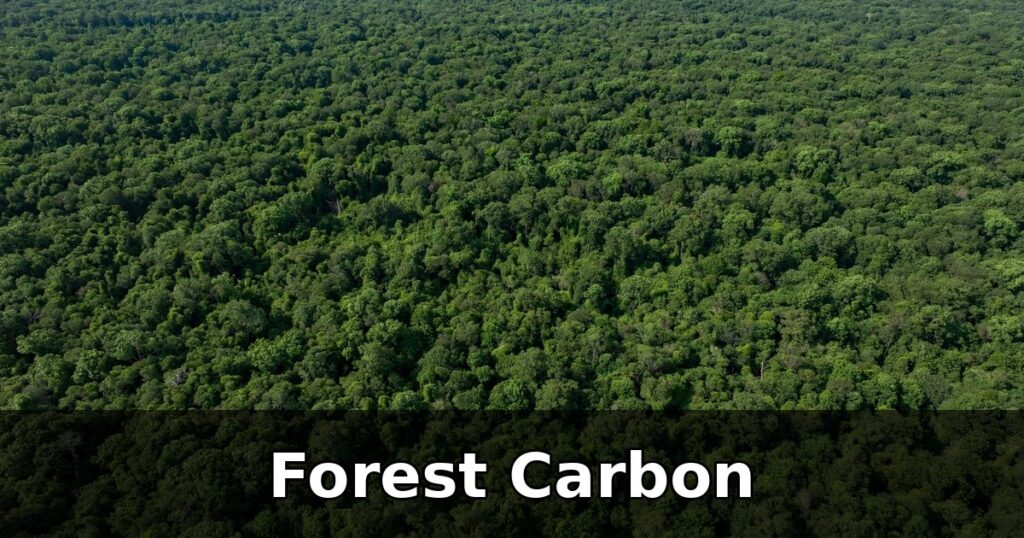
Forests as Carbon Sinks: Are They Still Absorbing What We Emit?
Forests have long been described as the lungs of the planet, but that metaphor can mislead. Forests do not simply breathe in carbon dioxide and breathe out oxygen in a tidy exchange. They store…
Key points
- Europe’s forest carbon sink fell by about 27 percent between 2020 and 2022 compared with the 2010–2014 average, from minus 456.9 million tonnes to minus 332.6 million tonnes of CO₂ equivalents per year.
- Australia’s tropical forests flipped from storing about 0.62 megagrams of carbon per hectare per year (1971–2000) to losing roughly 0.93 megagrams per hectare per year by 2010–2019.
- Two studies published in Nature in 2025 — one led by the EU’s Joint Research Centre, one led by Hannah Carle of Western Sydney University — point in the same direction: climate stress, not only clearing, is weakening the sink.
- The EU has a short-term target of an additional net reduction of 42 million tonnes of CO₂ equivalents by 2030 under its land-use framework, and a shrinking sink makes that target harder to meet.
- Cutting emissions is part of protecting the sink: fewer extremes mean forests that can once again bind more carbon.
Forests have long been described as the lungs of the planet, but that metaphor can mislead. Forests do not simply breathe in carbon dioxide and breathe out oxygen in a tidy exchange. They store carbon in trunks, branches, roots, leaves, dead wood, and soil, and they release it again when trees die, burn, decay, or are harvested. Whether a forest is a net carbon sink — absorbing more than it releases — or a net source depends on growth, mortality, disturbance, management, and climate, all changing at once.
For decades, the global balance has favoured absorption, which has quietly offset a significant share of human emissions. New research suggests that balance is weakening in some of the world’s most important forests, and that relying on forests to mop up emissions while emissions themselves remain high is becoming riskier. This is not a story about forests suddenly becoming villains. It is a story about a natural system under mounting stress, whose capacity to help us is not unlimited, and whose future depends on both how we manage forests and how quickly we cut fossil fuel emissions.
A warning from Europe, published in Nature
One of the clearest recent warnings comes from Europe. According to the European Commission’s Joint Research Centre, an article published in Nature in 2025, led by the Joint Research Centre, details a decline in the European forest carbon sink and its causes. The study is cited as Migliavacca and colleagues, Securing the forest carbon sink for the European Union’s climate ambition, Nature, 2025. The Joint Research Centre reported on 30 July 2025 that evidence now shows the carbon sink is weakening, with Europe’s forests absorbing less carbon dioxide from the atmosphere.
The numbers behind that warning are stark. According to the EU greenhouse gas inventory published by the European Environment Agency in 2024, the average forest carbon sink decreased by about 27 percent between 2020 and 2022 compared with the average for the years 2010 to 2014. Expressed in millions of tonnes of carbon dioxide equivalents, the values fell from an average of minus 456.9 million tonnes per year for 2010 to 2014, to minus 374.9 million tonnes per year for 2015 to 2019, and to minus 332.6 million tonnes per year for 2020 to 2022. The Joint Research Centre noted that the new 2025 EU inventory outlines an even worse picture, with a much stronger decline in the sink in the period that followed. In plain terms, a negative number here means net absorption, so a move toward zero means less absorption, not more emissions in the simple sense, but the climate consequence is similar: less carbon is being removed from the atmosphere than before.
The study identifies several causes, not a single culprit. Harvesting of trees has increased. Climate change is making heat and dry periods more frequent, which reduces tree growth. Climate change also tends to increase disruptive events such as insect outbreaks, fires, and tree mortality, which have become more frequent and severe in some areas. Ageing forests, a legacy of large-scale reforestation after the Second World War and changes in management, also play a role, because older forests often grow more slowly than young, vigorous stands. The combination matters: a forest weakened by dry conditions is more vulnerable to insects, and a forest damaged by insects or fire stores less carbon in the years that follow.
How the sink has shrunk
| Period | EU forest carbon sink (Mt CO₂e per year) | Change |
|---|---|---|
| 2010–2014 | −456.9 | Baseline |
| 2015–2019 | −374.9 | −82.0 |
| 2020–2022 | −332.6 | −124.3 from baseline; about 27% weaker |
A parallel signal from Australia’s tropics
Europe is not alone. A separate study published in Nature in 2025, led by Hannah Carle of Western Sydney University, examined Australia’s tropical forests using repeated forest inventories from 1971 to 2019. According to reporting on that study, between 1971 and 2000, the forests stored about 0.62 megagrams of carbon per hectare per year; by 2010 to 2019, they were losing roughly 0.93 megagrams of carbon per hectare per year. Over the full study period, the authors estimated the sink declined by about 0.041 megagrams of carbon per hectare per year on average. The study is cited as Carle and colleagues, Aboveground biomass in Australian tropical forests is now a net carbon source, Nature, 2025.
Rising tree mortality linked to hotter temperatures and more frequent climate extremes was identified as the principal cause. The paper reported no convincing evidence that elevated atmospheric carbon dioxide had driven enough extra woody growth to offset these losses. Severe weather compounded the problem: in some plots, cyclone and storm damage produced biomass losses comparable to the accumulated effect of gradual climate-driven mortality. The researchers used long-running permanent plots, high-resolution climate records, and causal-inference methods to separate climate-driven impacts from other factors, increasing confidence that the observed trends are climate related.
How a forest sink works, and why it can flip
To understand why a sink can weaken, it helps to think of a forest as a bank account with deposits and withdrawals. Deposits come from photosynthesis, as trees take in carbon dioxide and turn it into wood, leaves, and roots. Withdrawals come from respiration, as living trees and soil organisms release carbon dioxide, and from mortality, decay, fire, harvesting, and other disturbances that move carbon from living biomass to dead wood, soil, or the atmosphere. A sink exists when deposits exceed withdrawals over a given period. A source exists when withdrawals exceed deposits.
Several factors can shift that balance. Carbon dioxide fertilisation — the idea that higher atmospheric carbon dioxide boosts photosynthesis — can increase deposits, at least where water and nutrients are not limiting. In practice, many forests are limited by water, nitrogen, phosphorus, or other nutrients, so the fertilisation effect may be smaller than simple models suggest, and it may saturate over time. Warming can lengthen growing seasons in cold regions, which can help growth, but in already warm or dry regions it can increase water stress, reduce growth, and raise mortality. That regional difference is crucial. A global average can hide opposite trends in different places.
Why this matters for climate targets
Forests are woven into many climate plans. Countries count forest absorption in their greenhouse gas inventories, set land-use targets that assume a certain sink, and in some cases rely on forest carbon credits to offset emissions elsewhere. The European Union, for example, has a land use, land use change, and forestry framework, and a short-term target of achieving an additional net reduction of 42 million tonnes of carbon dioxide equivalents by 2030 compared with the average for 2016 to 2018, as set out in Regulation 2018/841. If the forest sink continues to decline, meeting such a target becomes harder, not because the target was poorly designed in principle, but because the natural system it depends on is changing.
The risk is sometimes called sink reliance: building a climate plan that assumes nature will keep absorbing a large share of emissions, while continuing to emit at a high rate. If the sink weakens, the plan falls short, and the shortfall must be made up by faster emission cuts elsewhere, or by accepting higher atmospheric concentrations. The European researchers’ message, as reported by the Max Planck Institute for Biogeochemistry, was blunt on this point: relying solely on natural carbon sinks is risky, and those who reduce emissions will be rewarded many times over, with fewer climate extremes and, as a result, forests that can once again bind more carbon. In other words, protecting the sink and cutting emissions are not alternatives. Cutting emissions is part of protecting the sink.
What better forest management could do
The Nature study on Europe does not only diagnose a problem. It sets out research priorities and management options, including better forest monitoring and modelling, and forest management to improve resilience. Practical measures discussed in reporting on the study include managing forests to be more resilient to future climate conditions and extreme weather, adapting timber harvesting practices, and improving the timeliness and completeness of data on carbon stocks and forest health.
Protection also matters, but it is not sufficient on its own. Protecting a forest from clearing prevents an immediate loss of carbon, which is essential. Yet a protected forest can still lose carbon to drought, fire, insects, or storms if climate stress intensifies. That is why researchers emphasise both protection and adaptation, alongside emission cuts. Restoration, including reforestation with appropriate native species and natural regeneration where possible, can rebuild sinks over time, but new forests take decades to store as much carbon as mature forests, and they need water, land, and long-term care. Planting trees is not a substitute for protecting existing forests, which already hold large carbon stocks that would take generations to replace.
What is still uncertain
One year proves little. A wet year can make a sink look strong and a dry year with fires can make it look weak. The European and Australian evidence gains weight because it covers multi-year and multi-decade periods, not single years.
Forest carbon accounting carries uncertainty. Measuring biomass, soil, and disturbance across large areas is difficult, and different methods can give different results. That uncertainty argues for better monitoring, not for dismissing the trend.
Not every forest is following the same path. Forests vary enormously, and some regions may still be strengthening as sinks, at least for now. The global land sink as a whole still absorbs a substantial amount of carbon dioxide each year, according to global carbon budget assessments.
Are forests still absorbing what we emit?
The short answer is: in many places, yes, but less than before, and in some places, no longer. The global land sink as a whole still absorbs a substantial amount of carbon dioxide each year, according to global carbon budget assessments, but the European and Australian evidence suggests that sink is under strain, and that strain is linked to the very warming it helps to moderate. That creates a feedback loop worth taking seriously: warming weakens sinks, weaker sinks allow more carbon dioxide to remain in the atmosphere, and higher concentrations drive further warming, unless emissions fall fast enough to break the cycle.
For readers, the practical takeaway is not to abandon hope in forests, nor to place blind faith in them. Support policies that protect existing forests, restore degraded land with diverse native species, improve monitoring, and manage harvesting for resilience. Be sceptical of claims that planting a certain number of trees, or buying a certain credit, neatly cancels a given amount of fossil fuel emissions, because forest carbon is reversible, slow to accumulate, and vulnerable to disturbance. And remember that the most reliable way to protect forests as carbon sinks is also the most direct way to address climate change itself: cut greenhouse gas emissions, so that forests face less heat, less drought, and fewer extremes in the decades ahead. Forests can help us, but they cannot rescue a strategy that keeps emitting as if their help were unlimited.
Raina





댓글 0
첫 댓글을 남겨보세요.