
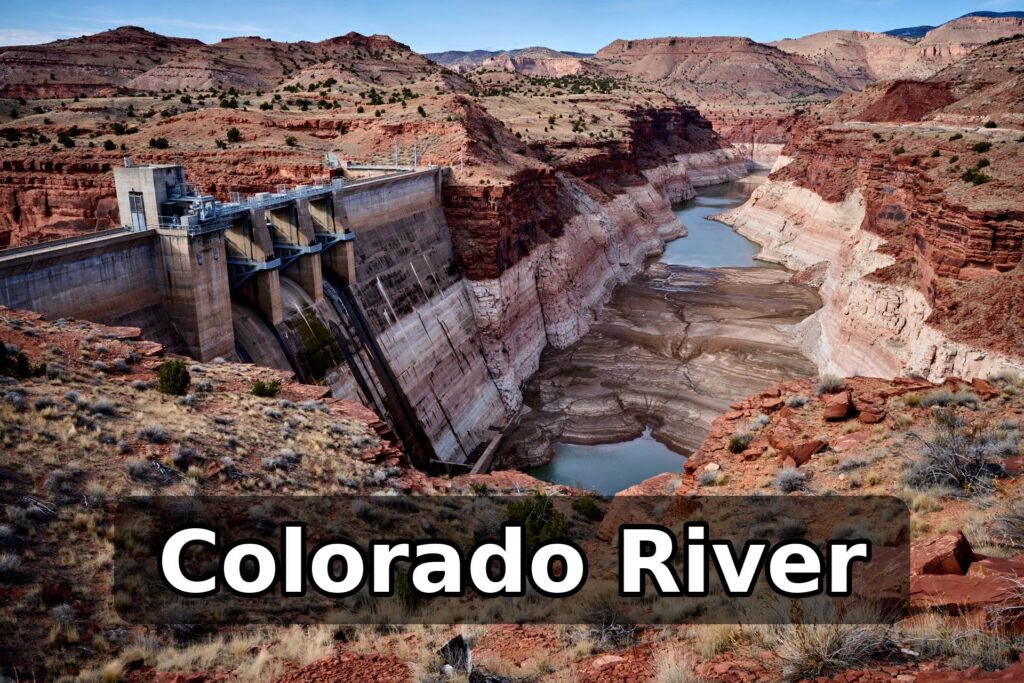
Colorado River Water Cuts: Can New Rules Save a River Shared by Seven States?
Guardian reporting on the Colorado River shows seven states in dispute over a shrinking river, where a new management plan may bring predictability and cuts but cannot by itself create water or resolve the mismatch between historical allocations and long-term supply.
Key points
- The Colorado River supplies farms, cities, and ecosystems across a vast dry region, shared by seven states whose needs, histories, and legal claims do not always align.
- The core problem is a mismatch: water was allocated on optimistic expectations of how much the river would reliably provide.
- Water cuts aim to bring total use closer to reliable supply, so reservoirs can recover and flows can be maintained.
- A new management plan can set rules in advance — but it cannot create water the river does not have.
- Whether the plan works will be judged by whether it actually leaves more water in the river and protects the people most affected by cuts.
The Colorado River is one of the most contested rivers in the United States. It supplies water to farms, cities, and ecosystems across a vast and dry region, and it is shared by seven states whose needs, histories, and legal claims do not always align. As the river shrinks, those states face a difficult question, reported by the Guardian: can new rules, including water cuts and a new management plan, save a river that everyone depends on but no one controls alone?
The question is deliberately uncertain. A new plan may help, but it may also fall short. It may reduce use enough to stabilise the system, or it may only delay a harder reckoning. Understanding why requires looking at both sides of the story: the conflict that makes agreement so difficult, and the limits that make even an agreement less than a complete solution.
A river promised more than it can deliver
The core problem of the Colorado River is a mismatch between promises and supply. Over many years, water was allocated among states, farms, cities, and other users on the basis of expectations that, in hindsight, were optimistic about how much water the river would reliably provide. When the river’s flow is lower than those expectations over a sustained period, the system cannot satisfy every claim at once.
This mismatch did not appear overnight. It grew as populations expanded, farming developed, and cities in dry regions came to depend on river water for daily life. Each new demand, taken on its own, may have seemed reasonable. Together, they created a system that depends on more water than the river can consistently deliver. Drought and a changing climate have made that mismatch harder to ignore, but they did not create it alone. The river was already stretched before its most severe recent declines.
The result is a system under chronic strain. Reservoirs fall, river flows decline, and users who once assumed reliable supplies face uncertainty. That strain is not only a technical problem of hydrology. It is a political and legal problem, because reducing use means asking some people, communities, or states to accept less than they have historically received, or less than they believe they are entitled to receive.
Seven states, different needs, different histories
Sharing a river among seven states sounds, in principle, like a cooperative endeavour. In practice, it is a negotiation among parties with very different circumstances. Some states are upstream, where the river originates and where water is first diverted. Others are downstream, where users depend on water that has already travelled through other states and been subject to upstream use. Some states have large agricultural sectors that use substantial amounts of water for irrigation. Others have large and growing cities whose drinking water depends heavily on the river.
Legal history adds another layer of complexity. Water rights in the western United States were often established on a first-come, first-served basis, and through agreements made decades ago, when conditions, populations, and knowledge were different. Those rights and agreements shape who is expected to cut back first, and by how much, when supplies fall. A state or user with an older right may argue that newer users should bear the cuts. A state or user with a newer right may argue that a fair system should share reductions more broadly. Both arguments have legal and moral weight, which is why agreement is so difficult.
Why agreement is so hard
Water negotiations are often described as disputes over a resource, but they are also disputes over fairness, identity, and future security. For a farming community, a water cut is not an abstract percentage. It may mean planting less land, changing crops, investing in new irrigation, or, in the worst case, leaving farming altogether. For a city, a water cut may mean finding alternative supplies, investing in reuse and conservation, or limiting growth. For both, the stakes are livelihoods, homes, and long-term plans.
Trust is another obstacle. States that agree to cut back may worry that others will not follow through, or will find ways to use water outside the agreement. States that have already invested in conservation may feel they should not be asked to cut further, while states that have used more water may feel they are being punished for past development. Without credible monitoring, enforcement, and shared information, even a well-designed plan can unravel.
What water cuts are meant to do
Water cuts, in this context, are reductions in the amount of water that users are allowed to take from the river system. Their purpose is straightforward: bring total use closer to what the river can reliably supply, so that reservoirs can recover, river flows can be maintained, and the system does not collapse under sustained overuse.
Cuts can take many forms. They may be voluntary, with states or users agreeing to reduce use in exchange for funding, flexibility, or future security. They may be mandatory, imposed through legal or administrative processes when voluntary agreement is insufficient. They may target particular uses, such as irrigation, or they may be shared across sectors. They may be temporary, responding to current reservoir levels, or they may be designed as longer-term reductions.
At their best, water cuts are not only a restriction. They are a signal that the old assumption of abundant water no longer holds, and a prompt to use water more carefully, to invest in efficiency, and to plan growth around a realistic supply. At their worst, they can become a source of resentment, especially if they fall unevenly or if they are announced without support for adaptation.
The new management plan: hope and limits
A new management plan for the Colorado River is, in essence, an attempt to replace crisis-driven cuts with a more predictable framework. Rather than negotiating reductions each time reservoirs fall to a critical level, a plan sets rules in advance: how water will be shared when supplies are low, how cuts will be triggered, and how different users will be treated. Predictability, in theory, should help everyone plan.
The Guardian’s reporting, however, points to the limits of such a plan. A plan can set rules, but it cannot create water that the river does not have. If the plan’s cuts are too small, or if they are based on optimistic assumptions about future flows, the river may continue to decline even under the new rules. If the plan avoids the hardest decisions, such as permanently reducing total demand, it may manage decline rather than reverse it.
There is also the question of enforcement. A plan that relies on voluntary compliance may work if trust is high and incentives are aligned. It may fail if some parties benefit from non-compliance, or if monitoring is weak. A plan with stronger enforcement may be more effective, but also more politically difficult to agree to. The tension between effectiveness and acceptability is at the heart of many water negotiations.
Agriculture, cities, and the environment in the same river
The Colorado River must serve multiple purposes at once, and those purposes compete. Agriculture uses a large share of river water, reflecting the importance of irrigated farming in dry regions. Cities depend on the river for drinking water and for economic growth. Ecosystems depend on flows that sustain habitats, fish, and riverside landscapes. Indigenous communities have rights and interests that must be respected, and that have historically been overlooked in many water arrangements.
Balancing these purposes is not a matter of choosing one over the others. A river system that supports only farming, only cities, or only ecosystems would fail the other users who depend on it. But balancing them requires trade-offs, and those trade-offs become sharper as supply falls. Protecting river flows for ecosystems may mean less water for farming or cities. Prioritising urban drinking water may mean greater pressure on agriculture. Supporting agriculture may mean accepting lower reservoir levels or reduced environmental flows.
The human cost of getting it wrong
Behind the language of allocations, cuts, and management plans are people whose lives are shaped by the river. Farmers face decisions about whether to continue farming, and under what conditions. Farmworkers face uncertainty about employment when irrigated land is reduced. City residents face questions about water prices, restrictions, and future growth. Rural communities face the risk of economic decline if farming contracts and alternative livelihoods do not emerge.
These human costs are not evenly distributed. Larger, wealthier users may adapt more easily, by investing in efficiency, purchasing water, or shifting operations. Smaller farmers, lower-income households, and communities with fewer resources may have less flexibility. A plan that looks fair on paper, with equal percentage cuts, may still have unequal effects in practice, because the ability to cope with a cut varies so much.
That is why support matters alongside cuts. Funding for efficient irrigation, assistance for communities in transition, investment in urban conservation, and protection for vulnerable households can make reductions more bearable and more just. Without such support, cuts may be resisted, evaded, or reversed, not because people do not understand the river’s plight, but because they cannot afford the consequences of acting on it.
Can new rules save the river?
Returning to the title question, the honest answer is that new rules can help, but they cannot, on their own, guarantee that the river will be saved. They can reduce use, create predictability, and provide a framework for cooperation. They can buy time for adaptation, and they can prevent the worst outcomes if they are ambitious enough and enforced fairly. What they cannot do is change the basic arithmetic of a river that is being asked to supply more water than it reliably provides.
Saving the Colorado River, if that is the goal, will likely require more than a single plan. It will require a sustained reduction in total demand to match long-term supply, not only temporary cuts during crises. It will require honest accounting of how much water the river actually provides, including in dry years, and a willingness to base allocations on that reality rather than on historical optimism. It will require cooperation among seven states that do not always agree, and attention to communities and ecosystems that are often marginal in negotiations.
The Guardian’s reporting captures this tension well: conflict and cooperation are both present, hope and limitation are both present, and no single agreement resolves the underlying problem. The new management plan should therefore be judged not only by whether it is agreed, but by whether it actually leaves more water in the river, protects the people most affected by cuts, and creates a path toward a sustainable balance.
If it does those things, it may be a meaningful step toward saving a shared river. If it does not, it may only postpone a reckoning that will become harder with each passing year. Either way, the Colorado River will continue to test whether seven states, with different needs and histories, can share a shrinking resource fairly, and whether rules written on paper can become a river that flows, for farms, cities, ecosystems, and communities, into the future.
Raina





댓글 0
첫 댓글을 남겨보세요.