
What to Pack in a Home Power-Outage Kit for a Winter Storm
Key points
- Ready.gov, the United States federal preparedness program, recommends at least three days of supplies: one gallon of water per person per day and a several-day supply of food that needs no refrigeration or cooking.
- An unopened refrigerator keeps food cold for about 4 hours; a full freezer holds temperature for about 48 hours, and a half-full freezer for about 24 hours.
- Winter Storm Uri in February 2021 cut power to more than 4.5 million Texas customers and caused 246 deaths, about two-thirds of them from hypothermia.
- Carbon monoxide kills more than 400 Americans a year in unintentional, non-fire poisonings, and portable generators alone account for nearly 100 deaths a year. Generators belong outdoors, at least 20 feet from the house.
- The kit is not a shopping list to buy during a storm warning. It is a box, packed and tested before the season, that lets a household stay warm, fed, and informed for three days without power.
A winter power outage is different from a summer one. In summer, losing power means losing light and refrigeration. In winter, it can mean losing heat — and heat is the difference between an inconvenience and an emergency. Pipes freeze, rooms cool hour by hour, and the usual substitutes for heat carry their own lethal risks indoors.
The lesson was written in Texas in February 2021. Winter Storm Uri knocked out power to more than 4.5 million customers, some for four days in subfreezing temperatures. The state later confirmed 246 storm-related deaths: about two-thirds from hypothermia, and 19 from carbon monoxide poisoning from generators, grills, heaters, and vehicles used the wrong way.
A kit does not prevent an outage. It buys time — three days of water, food, light, warmth, and information — so a household can wait out the repair crews safely instead of improvising dangerously. Gather everything before the season, store it in one place, and check it twice a year.
How long an outage lasts, and what fails first
Most winter outages are short. The kit is built for the one that is not: the ice storm that brings down lines across a county, or the deep freeze that damages equipment faster than crews can repair it. The average outage during Uri lasted about 42 hours; some households went without power for four days or more. Planning for three days covers most events.
What fails first is not always obvious. The refrigerator starts its clock at once: about 4 hours before its contents warm past safe temperatures, if the door stays closed. The freezer lasts about 48 hours if full, about 24 hours if half full — but only if nobody keeps opening it. The heating system stops with the power, even a gas furnace, because its fan and controls run on electricity. So does a well pump. Phones keep working until their batteries die, and then the household loses its warnings and its way of calling for help.
A house without heat cools faster than most people expect. A United States Department of Energy laboratory study found that a typical older house stayed livable for roughly half a day to a day in a hard northern cold snap, and for several days in a milder southern one. The first day without heat is the time to act, not the third day, when the house is already cold.
| What fails | How long it lasts | What to do |
|---|---|---|
| Refrigerator, door closed | About 4 hours | Eat refrigerated food first; discard perishables at 40°F or warmer |
| Freezer, full, door closed | About 48 hours | Keep the door shut |
| Freezer, half full, door closed | About 24 hours | Group food together to stay cold longer |
| Typical older house, hard freeze | About half a day to a day of livable warmth | Heat one room, not the whole house |
| Phone battery | Hours, without a charged backup | Charge a power bank before the storm |
Water and food: the core of the kit
Water comes first, because it is heavy, used constantly, and cannot be improvised. Ready.gov recommends one gallon of water per person per day, for drinking and basic sanitation, for at least three days. A family of four therefore needs at least 12 gallons. More is needed for children, for anyone ill or nursing, and for pets. Store it in sealed containers and replace it every six months. A bathtub filled before the storm is a useful reserve for flushing and washing, but not drinking water unless treated.
Food should need no refrigerator and little or no cooking: canned meats, beans, soups, vegetables, and fruit; peanut butter; crackers; cereal and granola bars; dried fruit and nuts; shelf-stable milk. A manual can opener belongs with the food. Ready.gov recommends at least a several-day supply of non-perishable food per person — three days as a floor.
Eat in the right order: refrigerated food first, then freezer food as it thaws, then shelf-stable food. Perishable food that has reached 40°F (4°C) or warmer for more than two hours should be thrown out.
Light, information, and power for phones
The safest light is a flashlight or a battery lantern. Candles cause fires, especially in a cold, dark house. The Red Cross and Ready.gov both recommend flashlights over candles. Pack one flashlight per person, plus a lantern for the gathering room, spare batteries, and headlamps, which leave both hands free.
When power and internet go out, a battery-powered or hand-crank radio — ideally a NOAA Weather Radio with tone alert — is the only reliable way to hear warnings, warming-centre locations, and restoration estimates. Keep it in the kit with batteries installed and spares beside it, and test it before the season.
Phones are the third need, and the one most households underestimate. A fully charged power bank can recharge a phone several times. A car charger is a backup, but it requires running the engine outdoors, never in an attached garage. Keep a written list of important phone numbers in the kit, on paper.
Staying warm without power
Warmth is the part most people get wrong, because they think in terms of heating the house. Heat one room, and heat the people in it. Choose the smallest room with the fewest windows, move the household into it, and close the doors to the rest of the house. Hang blankets over doorways and windows.
Clothing is the most reliable heating system in the kit. Thermal underwear, wool socks, a hat, and gloves — worn indoors — conserve body heat far more effectively than a single heavy blanket. The National Institute on Aging warns that even a mildly cool home, at 60°F to 65°F, can lead to hypothermia in older adults, and recommends 68°F to 70°F when possible. The World Health Organization proposes 18°C (64.4°F) as a safe indoor minimum, higher for vulnerable groups. Put a thermometer in the sheltering room and check it every few hours.
Hypothermia is a medical emergency. The CDC lists shivering, exhaustion, confusion, fumbling hands, memory loss, slurred speech, and drowsiness as warning signs, and says to seek help immediately if body temperature falls below 95°F (35°C). Older adults may not recognise that they are getting cold. More than half of hypothermia deaths in the United States occur in adults over 65.
Sleeping bags, emergency blankets, and extra blankets belong in the kit, one per person. What does not belong is any improvised heater: never use a gas stove or oven to heat the home, and never bring a grill, a camp stove, or charcoal indoors or into a garage.
The carbon monoxide trap
Carbon monoxide is the quiet killer of winter outages: a colourless, odourless gas produced whenever fuel burns, which the CDC calls a gas that kills without warning. More than 400 Americans die every year from unintentional, non-fire carbon monoxide poisoning, more than 100,000 visit an emergency department, and more than 14,000 are hospitalised.
Portable generators are the worst single source during outages. The Consumer Product Safety Commission reports an average of nearly 100 deaths a year from generator carbon monoxide alone. During Uri, 19 of the 246 confirmed deaths were carbon monoxide poisonings. Opening doors or windows does not provide enough ventilation to prevent a lethal build-up.
The rule is simple. Run a portable generator outdoors only, at least 20 feet from the house, with the exhaust pointed away from windows, doors, and vents. Never run one in a home, garage, basement, crawlspace, shed, porch, or carport — even with the doors open. Never leave a car running in an attached garage. A battery-powered carbon monoxide alarm belongs in the kit, and one should already be installed on each level of the home.
Medicines, documents, and the people who need more
Pack at least a week’s supply of prescription medicines, in their original containers, plus a written list of each medicine, its dose, and the prescribing doctor. Pharmacies close during storms, and a prescription that runs out on day two cannot be refilled until the roads clear. The same applies to powered medical devices: a backup battery and a note of the nearest hospital or shelter with power.
Infants need formula, diapers, and wipes for three days. Older adults need medicines, glasses, and hearing-aid batteries. Pets need food, water, and medicines for three days, plus a carrier or leash. A first-aid kit — bandages, antiseptic, pain relievers, and a thermometer — belongs in the box, not in a bathroom cabinet that is hard to reach in the dark.
Photocopies of identification, insurance policies, and bank numbers, stored in a waterproof bag, make the aftermath of a burst pipe far easier to handle. Cash in small bills belongs in the kit as well: card readers and cash machines stop working when the power does.
What is still uncertain
Outage duration cannot be predicted for any one household. Restoration estimates change as crews discover damage. A household that plans for three days and faces five will still need to leave or find help.
How fast a house cools depends on the house. The laboratory figures are averages, not a prediction for any particular home. The only reliable measure is the thermometer in the sheltering room.
Some deaths in Uri were probably never counted as storm deaths. The official count of 246 is the number the state could confirm. Independent analyses using excess mortality data have estimated a higher toll, with a midpoint of about 700.
What should change
Pack the kit before the season, not during a warning. The worst time to buy water, batteries, and a radio is the day a storm is forecast, when shelves are empty. Pack it in autumn, in one labelled box, in a place every adult knows.
Test it twice a year. Check the batteries, test the radio and flashlights, replace the water, and check expiry dates. A kit unopened for three years is a box of dead batteries and expired food.
Write the plan down. One page, in the kit: where the household will shelter, where the warming centre is, who to call, and at what temperature the household will leave.
Plan for the neighbours who cannot plan for themselves. The households most at risk are older adults living alone, people who depend on powered medical devices, and families with infants. A check-in call on the first evening of an outage costs nothing.
The kit, packed
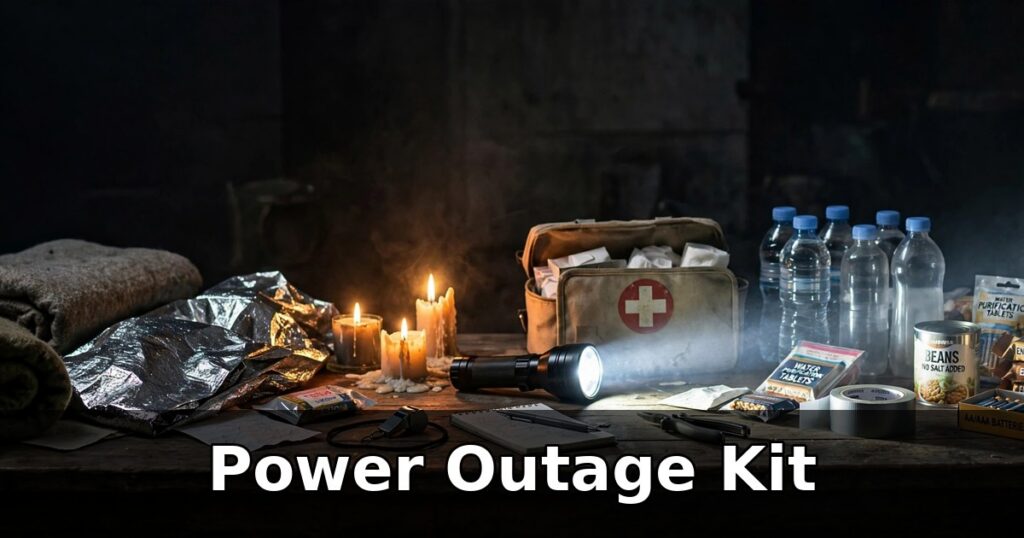
Water, one gallon per person per day for three days. Food that needs no fridge and no cooking, with a manual can opener. A flashlight for each person, a lantern, spare batteries, and a battery or hand-crank radio. A charged power bank and a paper list of phone numbers. A first-aid kit and a week’s medicines. Blankets, warm clothing, and a thermometer. A battery-powered carbon monoxide alarm. Cash, copies of documents, and pet supplies. That is the whole kit: one box, and the difference between waiting out a storm and becoming part of its casualty count.
Raina





댓글 0
첫 댓글을 남겨보세요.