
The Cost of Cooling: Air Conditioning in a Hotter World
On a hot afternoon in a modern city, air conditioning is almost invisible. It hums behind walls, drips from outdoor units, and keeps offices, hospitals, schools, and homes bearable when the air…
Key points
- Global electricity demand for space cooling has grown by about 50 percent since 2015, rising to around 2,900 terawatt-hours — more than the total electricity demand of the entire European Union.
- In 2025, cooling contributed 1,400 gigawatts of peak electricity demand, equivalent to the total installed power generation capacity of the United States.
- Only around 40 percent of the world’s population has access to air conditioning, although more than 80 percent experience cooling needs during part of the year.
- Under current policies, global cooling demand is projected to increase by 1,600 terawatt-hours by 2035.
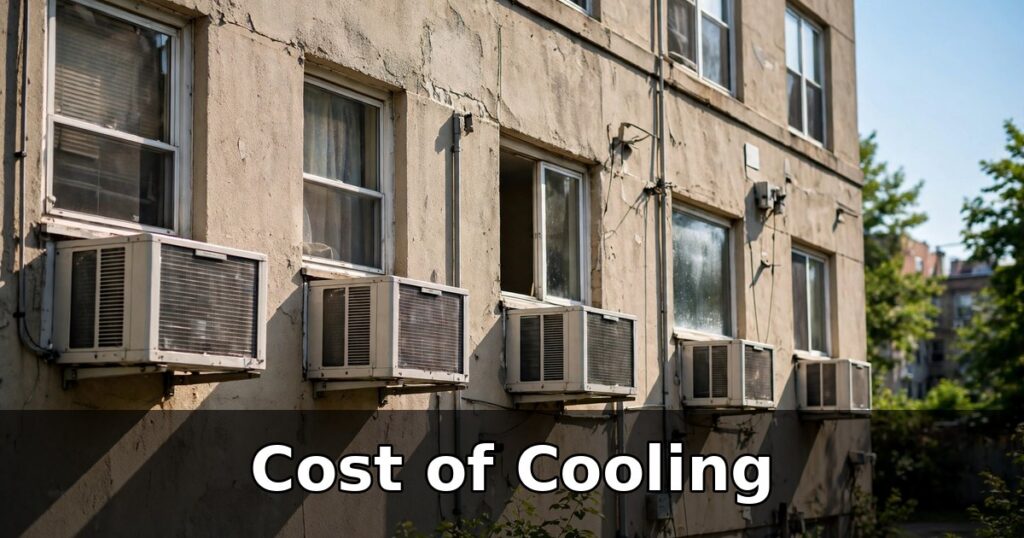
On a hot afternoon in a modern city, air conditioning is almost invisible. It hums behind walls, drips from outdoor units, and keeps offices, hospitals, schools, and homes bearable when the air outside is dangerous. For many people, it is not a luxury but a health necessity, especially for older adults, young children, and people with certain medical conditions.
That paradox has become a central energy and climate issue, and a recent analysis from the International Energy Agency (IEA) puts its scale in stark terms. According to the IEA’s commentary, Cooling a Hotter World: El Niño Meets Strong Growth in Global Electricity Demand, global electricity demand for space cooling, including fans, air conditioning, and district cooling, has grown by about 50 percent since 2015, rising to around 2,900 terawatt-hours, more than the total electricity demand of the entire European Union.
Since 2015, cooling has accounted for 14 percent of global electricity demand growth, reaching as much as 25 percent in the Middle East and North Africa region. In 2025, cooling contributed 1,400 gigawatts of peak electricity demand across markets, equivalent to the total installed power generation capacity of the United States. Electricity demand overall reached record-high levels in 2025, according to the IEA, increasing at well over twice the rate of overall energy demand.
Those figures describe a system under pressure, not a single heatwave. They also describe a profound inequality, because access to cooling is far from universal. Around 40 percent of the world’s population has access to air conditioning, according to reporting on the IEA analysis, although more than 80 percent experience cooling needs during part of the year. Household ownership is nearly 90 percent in Japan and the United States, while remaining comparatively low in Southeast Asia and India, even as temperatures and incomes rise. In China, air conditioner ownership has increased by 50 percent over the past decade.
The cost of cooling is therefore not just a bill. It is a question of who gets to be cool, who pays for the power, and who bears the climate consequences of providing it.
Why cooling demand is rising so fast
Three forces are driving cooling demand upward at the same time, and they reinforce each other. The first is temperature. As average temperatures rise and heat extremes become more frequent and intense in many regions, more days require cooling, and cooling is needed for more hours on each of those days. A hotter world does not just make existing air conditioners run longer; it makes cooling necessary in places and seasons where it was previously occasional, from northern Europe to high-altitude cities that once relied on open windows.
The IEA has repeatedly noted that cooling is the fastest-growing source of electricity demand in buildings, increasing by more than 4 percent per year since 2000, according to its Energy Efficiency 2025 report, and that much of that demand is met by equipment operating far below the highest efficiency levels.
| Measure | Figure |
|---|---|
| Cooling electricity demand, 2025 | About 2,900 TWh (up ~50% since 2015) |
| Share of global electricity demand growth since 2015 | 14% (up to 25% in Middle East and North Africa) |
| Cooling peak demand, 2025 | 1,400 GW — equal to total US installed capacity |
| Cooling demand growth in buildings since 2000 | More than 4% per year |
| World population with air conditioning access | Around 40% |
| World population with cooling needs part of the year | More than 80% |
| Household AC ownership, Japan and US | Nearly 90% |
| AC ownership growth in China over past decade | 50% |
The peak problem
Cooling is especially challenging for electricity systems because it is concentrated in time. Everyone wants cooling at roughly the same moment: on hot afternoons, when temperatures peak and people return home, turn on air conditioners, and add cooking and other loads. That synchronised demand creates a peak that power systems must be built to meet, even if that peak lasts only a few hours on a few dozen days per year.
The IEA’s figure of 1,400 gigawatts of peak demand from cooling in 2025 illustrates the scale: meeting that peak requires generation, transmission, and distribution capacity that sits idle for much of the year but must be available when heat strikes.
In some countries, governments have responded by restricting air conditioning use in public offices or asking offices to switch off cooling on certain days, as the IEA notes in the cases of Jordan and the Seychelles, a sign of how acute the pressure can become.
The efficiency gap
One of the most frustrating aspects of the cooling story is that much of the growth in demand could be reduced without reducing comfort, simply by using more efficient equipment. The IEA’s Energy Efficiency 2025 report states that if all air conditioners sold since 2019 had been of the highest efficiency class, the increasing energy demand of data centres could have been largely offset, according to reporting on the report.
That comparison is striking because data centres are often portrayed as the dominant new load on grids, yet the wasted energy from inefficient air conditioners is of a similar order.
Partly because information is poor: a consumer may not know how much electricity two superficially similar air conditioners will use over a decade, or how much a slightly more expensive model could save. And partly because cooling is often an emergency purchase, made during a heatwave when the priority is immediate relief, not long-term efficiency.
The IEA notes that China’s new export air conditioner efficiency provisions could improve efficiency standards in countries with weaker regulatory frameworks, because China produces around 170 million air conditioner units annually and exports about 60 million, according to reporting on the IEA briefing. When the world’s largest manufacturer raises its export standards, the global market shifts, even in countries that have not yet updated their own rules.
Cooling without air conditioning, and cooling better with it
Efficient air conditioners are necessary, but they are not sufficient. The cheapest and often most effective cooling is the cooling that is never needed because a building was designed to stay cool. Shading windows from direct sun, using reflective or light-coloured roofs and surfaces, insulating walls and roofs, ventilating at night when outdoor air is cooler, and planting trees and vegetation around buildings can all reduce indoor temperatures substantially.
Traditional architecture in hot climates, from thick walls and courtyards to wind towers and shaded verandas, embodies centuries of passive cooling knowledge that modern construction has often ignored in favour of sealed glass boxes cooled by machines.
Smart controls that pre-cool buildings before a peak, adjust temperatures modestly during extreme peaks, and coordinate across a neighbourhood can further smooth demand, provided they are designed with occupant health and consent in mind, not imposed in ways that leave vulnerable people overheated.
Who pays, and who goes without
The cost of cooling falls unevenly. In high-income countries, cooling is often a larger share of household energy bills in summer, but most households can afford it, and energy assistance programmes, though imperfect, exist. In low- and middle-income countries, and among low-income households everywhere, cooling may be unaffordable, unavailable, or rationed in ways that harm health.
Breaking that cycle requires both expanding access to cooling for those who need it and decarbonising the electricity that powers it, alongside efficiency and passive design. Expanding access without efficiency or clean power would increase emissions. Pursuing efficiency without expanding access would leave millions overheated. Both must happen together.
What the projections say
The IEA’s projections underline the stakes. Under current policy settings, global cooling demand is projected to increase by 1,600 terawatt-hours by 2035, according to reporting on the IEA briefing, with an additional 700 terawatt-hours possible in a scenario with recurring strong El Niño events every three years, with over 60 percent of that additional increase driven by higher air conditioner adoption.
Those are projections, not observed facts, and they depend on policy, technology, and climate pathways that can still change. But they indicate the direction of travel if current trends continue: cooling will become one of the largest drivers of electricity demand growth, and the choices made in the next decade about standards, building design, and power generation will shape its cost for decades.
What should change
Air conditioning is often framed as a simple consumer choice: buy a unit, turn it on, stay cool. In reality, it is a system choice, involving buildings, grids, standards, and social policy. A hotter world will need more cooling, not less, and denying that need would be both unrealistic and unjust. The challenge is to meet it without locking in decades of high energy use, high emissions, and high bills, and without leaving the most vulnerable to swelter while others cool comfortably.
That means treating cooling as infrastructure, not just as an appliance. It means building homes and schools that stay cool passively, setting standards so that the air conditioners people buy are efficient, powering them with clean electricity, and ensuring that low-income households can afford to use them safely. It means planning grids for peaks, not just averages, and using storage, district systems, and smart controls to manage those peaks.
And it means recognising that the cost of cooling is not only the electricity bill. It is also the health cost of going without, the climate cost of powering inefficiently, and the infrastructure cost of building grids for ever-higher peaks.
The IEA’s recent figures are a warning, but they are also a measure of progress in understanding. A decade ago, cooling was often overlooked in energy planning, treated as a minor load or a luxury. Today, it is recognised as a major driver of electricity demand, a health necessity, and a climate challenge all at once. That recognition is the first step toward a cooler future that is affordable, equitable, and sustainable, one in which cooling protects people from heat without making the heat itself worse.
Raina





댓글 0
첫 댓글을 남겨보세요.