
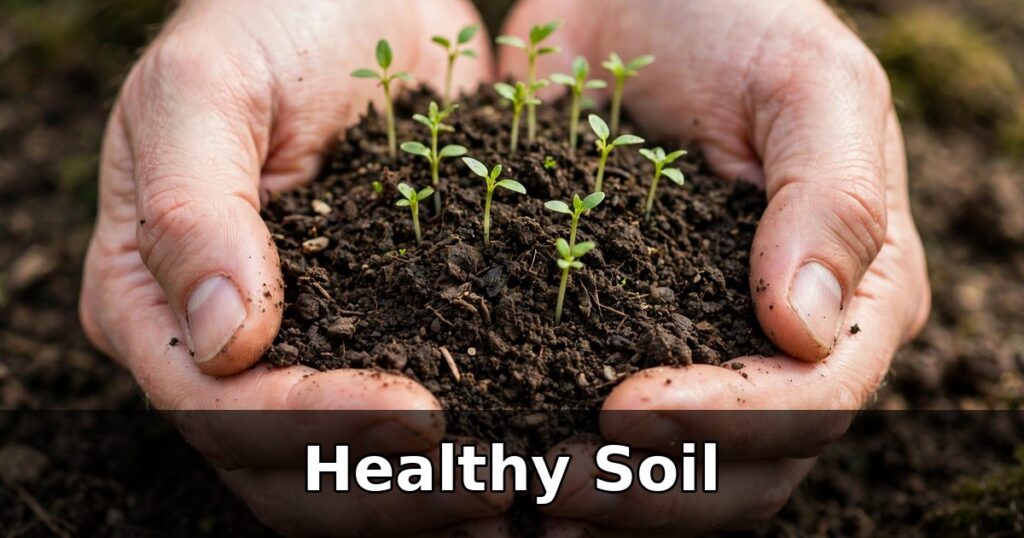
Regenerative Farming: Can Healthier Soil Help Cool the Planet?
Soil is easy to overlook. It is underfoot, out of sight, and often treated as little more than dirt to hold plants upright while fertiliser does the real work. In reality, soil is a living, complex…
Key points
- On December 10, 2025, the United States Department of Agriculture announced a $700 million Regenerative Pilot Program for soil health and water quality.
- The funding combines $400 million through EQIP (Environmental Quality Incentives Program) and $300 million through CSP (Conservation Stewardship Program).
- Soil carbon is real but limited: storage slows as soils approach a new equilibrium, and stored carbon can be lost quickly if management changes.
- Healthier soil can store more carbon — but it is one wedge in a broader climate strategy, not a substitute for cutting fossil fuel emissions.
How soil is managed affects not only crop yields, but water quality, biodiversity, resilience to drought and flood, and the amount of carbon stored in the ground versus released to the atmosphere. That is why regenerative farming — an approach centred on rebuilding soil health — has attracted attention as both an agricultural practice and a climate strategy.
Interest in regenerative farming received a significant policy boost on December 10, 2025, when the United States Department of Agriculture announced a 700 million dollar Regenerative Pilot Program, combining 400 million dollars through the Environmental Quality Incentives Program, known as EQIP, and 300 million dollars through the Conservation Stewardship Program, known as CSP, focused on soil health and water quality.
A pilot program is not a permanent, nationwide transformation, and 700 million dollars, while substantial, is modest compared with total agricultural spending. But the announcement signals that soil health is moving from a niche concern of a few innovative farmers to a recognised public policy goal, with public funding attached. The question that follows is whether healthier soil can, in practice, help cool the planet, and if so, how much, how quickly, and under what conditions.
| Program | Funding | Focus |
|---|---|---|
| Regenerative Pilot Program (total) | $700 million | Soil health and water quality |
| EQIP — Environmental Quality Incentives Program | $400 million | Cost-share for specific practices |
| CSP — Conservation Stewardship Program | $300 million | Rewards for farmers already practising conservation |
What regenerative farming actually means
Regenerative farming is not a single, certified practice, and that lack of a single definition is both a strength and a weakness. In general, it refers to a set of principles and practices aimed at improving soil health, rather than depleting it. Those principles typically include minimising soil disturbance, for example by reducing tillage, which breaks up soil structure and exposes carbon to decomposition.
They include keeping soil covered, with living plants or mulch, for as much of the year as possible, rather than leaving fields bare between crops. They include diversifying crops, through rotations and cover crops, rather than growing the same crop year after year. They include integrating livestock, where appropriate, in ways that mimic natural grazing patterns and return manure to the soil.
What is new is the framing: soil health as a central goal, not a side effect, and the explicit link to climate, through carbon storage, and to water, through improved infiltration and retention. A farm that follows regenerative principles may look different from a conventional farm — more diverse, with cover crops in winter, with less bare soil, with hedgerows or field margins that support wildlife — but it is still a working farm, producing food, managing pests and weeds, and coping with weather and markets.
How soil stores carbon, and why it matters
Soil stores carbon primarily as organic matter: dead plant roots and leaves, microbial bodies, and the complex compounds formed as organic material decomposes. When plants photosynthesise, they capture carbon dioxide from the atmosphere and convert it into sugars and other compounds. Some of that carbon becomes plant biomass above ground, some becomes roots below ground, and some is released by roots into the soil, feeding microbes.
When plants die, their residues enter the soil, where microbes decompose them. Some carbon is released back to the atmosphere as carbon dioxide during decomposition, but some is stabilised in soil, bound to mineral particles or protected inside soil aggregates, where it can remain for years, decades or longer.
Practices that increase plant growth, increase root biomass, reduce disturbance and protect soil structure can increase the amount of carbon stored, at least up to a point. Cover crops, for example, keep living roots in the soil during periods when fields would otherwise be bare, capturing carbon and feeding soil biology through winter. Reduced tillage leaves soil aggregates intact, protecting carbon inside them from rapid decomposition. Diverse rotations and perennial plants, with deeper and more varied root systems, can add carbon at different depths.
That saturation means soil carbon storage is best understood as a one-time gain from improving degraded soils, rather than an ever-growing sink that can offset ongoing emissions year after year. Soil carbon is also reversible: if a farmer who built up soil carbon through reduced tillage later ploughs deeply, or converts a perennial pasture to annual cropping, much of the stored carbon can be released relatively quickly. Permanence, in soil carbon, depends on continued management, not on a single action.
Measurement is another challenge. Soil carbon varies greatly across a field, with depth and over time, making it difficult and expensive to measure accurately. Sampling a few spots may not represent a whole farm, and changes over a few years may be smaller than measurement uncertainty. That does not mean soil carbon storage is imaginary, but it does mean that claims about precise amounts sequestered by a particular farm or program should be treated cautiously, and that programs should invest in robust monitoring, rather than relying on models alone.
Water quality, resilience and the co-benefits that may matter most
For many farmers, the most immediate benefits of healthier soil are not carbon, but water and resilience. Soil rich in organic matter can absorb more water, hold it longer and release it more slowly to plants. That improves resilience to both drought and heavy rain: during dry periods, crops can draw on stored soil moisture for longer; during storms, water infiltrates rather than running off, reducing erosion and flooding downstream.
The USDA pilot’s pairing of soil health with water quality reflects this connection: practices that build soil organic matter often also protect water, and water quality is a public benefit that justifies public investment, even apart from climate. Resilience to climate extremes is increasingly important for farmers facing more variable weather. A farm with healthy soil may still suffer in a severe drought or flood, but it may recover faster, lose less topsoil, and require fewer inputs to return to production.
Biodiversity is another co-benefit. Diverse rotations, cover crops, field margins and reduced pesticide use can support pollinators, beneficial insects, birds and soil organisms, contributing to ecosystem services that farming depends on, such as pollination and natural pest control. These benefits are difficult to quantify in dollars or tonnes, but they are real, and they illustrate why regenerative farming should not be judged on carbon alone.
The USDA pilot: what 700 million dollars can and cannot do
The December 10, 2025 USDA announcement of a 700 million dollar Regenerative Pilot Program, with 400 million dollars through EQIP and 300 million dollars through CSP, for soil health and water quality, should be understood in context. EQIP and CSP are existing conservation programs that provide financial and technical assistance to farmers who adopt conservation practices. EQIP typically supports specific practices, such as cover cropping or reduced tillage, through cost-share payments. CSP typically rewards farmers who are already practising conservation and who agree to adopt additional enhancements.
A pilot, by definition, is an experiment: a chance to learn what works, what does not, and how to scale up effective approaches. Judging it as if it were already a nationwide solution would be premature; dismissing it as too small to matter would also miss the point, because pilots can inform larger programs and can demonstrate benefits that attract further investment.
It is also important to distinguish a pilot program from a carbon market. The USDA pilot, as described, focuses on soil health and water quality, not on generating carbon credits for sale. That distinction matters, because carbon markets raise additional questions about additionality — whether carbon storage would have happened without payment — about permanence, about measurement, and about whether credits allow emitters to continue polluting while claiming offsets.
Equity is a critical consideration. Conservation programs have historically reached larger, wealthier and better-connected farmers more easily than small, tenant or historically underserved farmers, who may lack land tenure security, access to information or capacity to navigate application processes. If a regenerative pilot primarily benefits those already best positioned to adopt new practices, it may widen existing gaps. Designing outreach, technical assistance and payment structures to reach diverse farmers, including those renting land, those farming on small acreage, and those from communities that have faced discrimination in agricultural programs, is essential if regenerative farming is to be a broad, fair transition rather than a niche opportunity.
Can healthier soil help cool the planet?
The short answer is: yes, but not alone, and not as a substitute for cutting fossil fuel emissions. Healthier soil can store more carbon, reduce emissions from soil disturbance and from fertiliser use, and increase resilience to climate extremes, all of which help. The scale of that help, however, is limited by saturation, by reversibility, and by the sheer size of fossil fuel emissions compared with the amount of carbon soils can plausibly store over coming decades.
Soil carbon storage is a valuable wedge in a broader climate strategy, alongside renewable energy, energy efficiency, reducing deforestation and cutting emissions from industry and transport. It is not a get-out-of-jail-free card that allows emissions to continue unchecked while soils absorb the excess. That framing — soil as one wedge, not the whole solution — is important for avoiding two opposite errors.
What is still uncertain
How much carbon a given farm can store, how long it will stay stored, and how precisely that storage can be measured remain uncertain — and the answers vary by soil, climate and management. Changes over a few years may be smaller than measurement uncertainty, and a single change in practice can release much of what was gained. That uncertainty is a reason for robust monitoring and honest claims, not a reason to dismiss soil health, whose water, resilience and biodiversity benefits are experienced directly.
Soil, food and the future of farming
Soil, long overlooked, is finally receiving attention as a climate and food security asset. Whether healthier soil can help cool the planet depends not only on biology and chemistry, but on policy, markets, and the willingness to support farmers through a transition that takes time, involves risk, and offers benefits that are real, if sometimes quiet and difficult to measure. The ground beneath our feet may not be the whole answer to climate change, but it is part of the answer, and it deserves to be treated as such.
Raina





댓글 0
첫 댓글을 남겨보세요.