
Did Drought Cause the Maya Collapse—or Did Climate Stress Meet Other Crises?
The Washington Post covers a new study arguing drought alone cannot explain the Maya cities' decline — climate stress overlapped with warfare, political fragility, and inequality, and it was that combination that proved fatal.
Key points
- A new study suggests drought alone is hard to use as the sole explanation for the decline of the Maya cities — the real story is climate stress overlapping with political and social vulnerability.
- Evidence for drought is substantial: lake sediments, cave stalagmites and other natural archives record a series of dry periods across decades, coinciding broadly with the era of abandonment.
- But different cities declined at different times, some persisted or even thrived while neighbours faltered, and the Maya had survived earlier droughts.
- Signs of trouble — warfare, broken trade networks, political fragmentation, malnutrition, declining construction quality — predate the worst droughts.
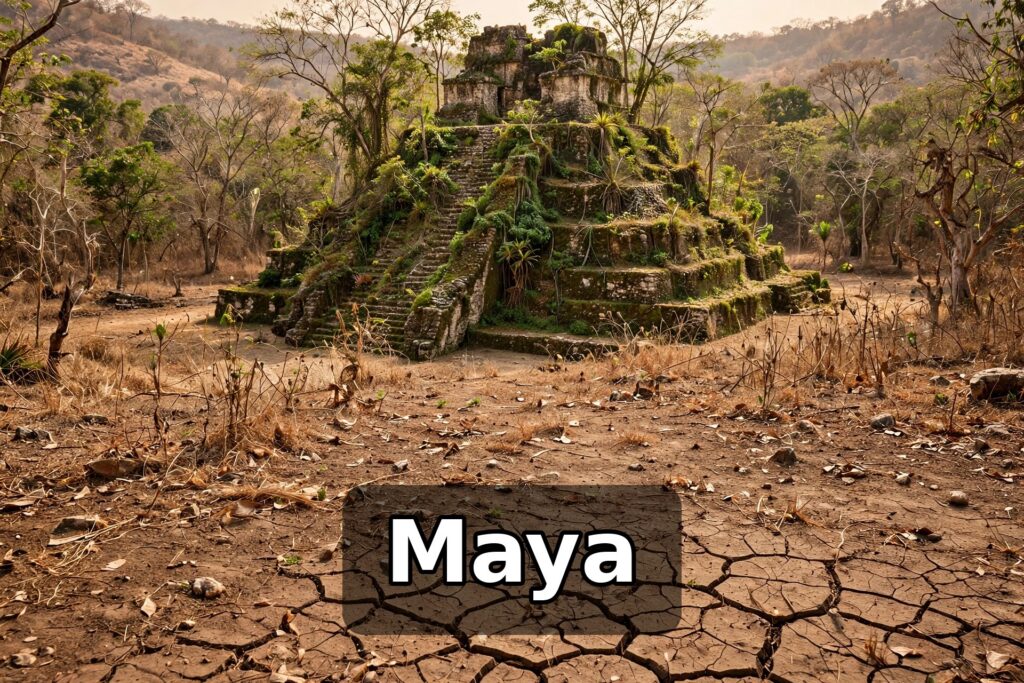
The fall of the ancient Maya cities is one of history’s great mysteries, and for a long time it came with a satisfyingly simple explanation: a terrible drought dried up the civilisation. The image is vivid — great stone cities abandoned as the rains failed, their people dispersing into the forest.
But a new study suggests that drought alone is hard to use as the sole explanation for the decline of Maya cities. The real story, researchers argue, is more complex and more interesting: environmental change overlapped with political and social vulnerability, and it was the combination, not any single cause, that brought the cities down.
That revision matters beyond ancient history. The Maya collapse is frequently invoked as a cautionary tale about climate change, and the lesson drawn from it depends on which explanation is correct. If drought alone destroyed a civilisation, the lesson is about the power of climate. If drought met political fragility, inequality and conflict, the lesson is about resilience — about how societies withstand shocks, and why some do and others do not.
Getting the history right changes the lesson for the present.
What the Maya cities were
To understand the collapse, it helps to picture what was collapsing. The Classic Maya civilisation, flourishing in what is now southern Mexico, Guatemala, Belize and Honduras, was not a single empire but a network of rival city-states, each with its own king, its own monumental architecture and its own political ambitions.
Cities like Tikal, Calakmul, Copán and Palenque built towering temples and palaces, developed sophisticated writing and astronomy, and supported populations that, in the largest cities, ran into the tens of thousands. These cities depended on agriculture, and agriculture in the Maya lowlands depended on rainfall.
The region has a pronounced seasonal cycle: a wet season that fills reservoirs and waters crops, and a dry season during which stored water becomes essential. The Maya were skilled water managers, building reservoirs, canals and terraces to capture and conserve rain, and their agricultural systems — including raised fields in wetland areas and intensive cultivation around cities — supported dense populations in a landscape that, without management, could not have fed them.
But that success created vulnerability. Large urban populations depended on food produced in their hinterlands and on water stored in reservoirs, and both depended on reliable rains. When the rains faltered, the margin for error was thin, especially in the largest cities, where the population had grown beyond what local resources could support in a bad year.
What the climate record shows
Evidence for drought in the Maya region during the period of the cities’ decline comes from several sources, and it is substantial. Sediment cores from lakes, stalagmites from caves and other natural archives record periods of reduced rainfall coinciding broadly with the era when many Maya cities were abandoned.
The droughts were not a single event but a series of dry periods, some severe, stretching across decades. That they occurred is not seriously in doubt, and they unquestionably stressed Maya society. The question is whether they are sufficient as an explanation. The new study argues that they are not, for several reasons.
First, the timing is not as neat as the simple story suggests: different cities declined at different times, and some persisted or even thrived while their neighbours faltered, which is hard to reconcile with a single regional drought as the sole cause.
Second, the Maya had survived earlier droughts. Their water management systems and agricultural diversity gave them tools to cope with dry years, and they had done so before. Something else must have changed to turn a survivable shock into a terminal one.
Third, the archaeological record shows signs of trouble that predate the worst droughts: increasing warfare between city-states, the breakdown of trade networks, political fragmentation, and evidence of social stress such as malnutrition and declining construction quality. These are signs of a society already under strain, in which a drought would land on weakened foundations rather than on solid ones.
| Evidence | What it shows | Why it challenges the drought-only story |
|---|---|---|
| Timing of decline | Different cities declined at different times | A single regional drought should hit them together |
| Earlier droughts | The Maya survived previous dry periods | Survival before means something else changed |
| Pre-drought stress | Warfare, broken trade, fragmentation, malnutrition | Trouble predates the worst droughts |
How climate stress meets social vulnerability
The more persuasive explanation is therefore one of interaction. Climate stress — a series of droughts reducing harvests and water supplies — arrived in a society already weakened by political and social pressures. The interaction worked in several ways.
Warfare between rival cities consumed resources, disrupted agriculture and displaced populations. A city at war cannot maintain its reservoirs or its fields as effectively, and its farmers cannot work land that has become a battlefield. When drought reduced harvests, the grain that might have fed a city was instead consumed by armies or lost to disrupted trade, and the reserves that might have carried a population through a bad year were already depleted.
Political legitimacy was also at stake. Maya kings derived their authority partly from their claimed ability to intercede with the gods for rain and agricultural fertility. When the rains failed repeatedly, that claim was undermined, and with it the political order that held cities together. A king who could not deliver rain might face rebellion, rival claimants, or the quiet withdrawal of allegiance by nobles and commoners alike. The drought thus attacked not only the food supply but the ideological foundations of Maya kingship.
Social inequality compounded the problem. In a stratified society, the burden of scarcity falls unevenly. Elites could command stored grain and labour, while commoners faced the sharpest edge of food shortages. As conditions worsened, the social contract that bound city populations together frayed, and people voted with their feet, leaving cities for smaller settlements where life was harder but more sustainable.
The abandonment of the great cities was, in this view, not a sudden catastrophe but a gradual dispersal, as the urban system that had concentrated people and power became untenable.
Population pressure may have been the underlying condition that made all of this possible. The largest Maya cities had grown to sizes that strained their agricultural base even in good years. Intensive farming, deforestation for construction and fuel, and soil degradation may have reduced the landscape’s resilience, so that when drought arrived, the system had less slack than it had in earlier centuries. A society living close to its ecological limits is vulnerable to shocks that a society with more margin could absorb.
| Pressure | How it weakened the cities before the drought |
|---|---|
| Warfare | Consumed resources, disrupted agriculture, displaced populations, depleted reserves |
| Political legitimacy | Kings claimed to intercede for rain; repeated failure undermined the political order |
| Inequality | Scarcity fell hardest on commoners while elites commanded stored grain and labour |
| Population pressure | Largest cities strained their agricultural base even in good years; deforestation and soil degradation cut resilience |
What is still uncertain
The climate record is broad, not precise. Natural archives record dry periods coinciding broadly with the era of abandonment, but broad coincidence is not a timetable for each city’s decline.
How much each factor contributed cannot be separated cleanly. Drought, warfare, inequality and population pressure interacted, and the archaeological record shows them together rather than in isolation.
The dispersal was gradual, not a single event. Abandonment unfolded city by city over time, which fits an interaction of stresses better than a single catastrophe — but it also makes any single turning point hard to identify.
Why the distinction matters today
The revised understanding of the Maya collapse carries a lesson that is directly relevant to the present. Modern societies, like the Maya cities, face climate stress — droughts, floods, heat waves — and the question is not whether those stresses will occur but whether societies are resilient enough to withstand them.
Resilience is not only a matter of technology or infrastructure. It is also a matter of political stability, social cohesion, economic fairness and the capacity of institutions to respond to crisis without fracturing. A society riven by conflict, inequality and political dysfunction will handle a drought worse than a society that is cohesive and well-governed, even if the drought itself is identical.
Conversely, investments in social resilience — in functioning institutions, in equitable food systems, in safety nets for the vulnerable — are also investments in climate resilience, because they determine whether a shock becomes a crisis or remains a hardship.
The Maya story also cautions against environmental determinism: the idea that climate alone dictates the fate of civilisations. Climate shapes the conditions in which societies operate, but societies make choices — about warfare, about inequality, about resource management — that determine how those conditions are experienced. The Maya did not simply succumb to the weather. They were caught in a convergence of environmental stress and human-made vulnerability, and it was the convergence that proved fatal.
What this means
Collapse is a convergence, not a single cause. Drought unquestionably stressed Maya society, but the cities fell when that stress met warfare, fragile legitimacy, inequality and populations living close to ecological limits.
Earlier survival is the clue. The Maya had coped with dry years before. The difference in the final centuries was not the weather alone but the weakened foundations the weather landed on.
Resilience is social as well as technical. Reservoirs, canals and terraces were sophisticated engineering, and they were not enough once the political and social systems that maintained them began to fracture.
What should change — for the present
Strengthen institutions before the shock arrives. Functioning government, social cohesion and fair food systems decide whether a drought becomes a hardship or a crisis.
Do not let conflict consume the reserves needed for hard times. Warfare depleted grain, disrupted trade and displaced farmers — the very buffers a society needs when harvests fail.
Keep margin in the system. Populations and farming systems living close to their ecological limits have no slack when a shock arrives; sustainable resource management is climate preparation.
Not because the rain stopped
That is a more sobering lesson than the simple drought story, but also a more hopeful one. If collapse were caused by climate alone, there would be little societies could do but hope for rain. If collapse results from the interaction of climate with political and social fragility, then societies have agency.
By strengthening institutions, reducing inequality, managing resources sustainably and avoiding the conflicts that consume the reserves needed for hard times, they can increase their chances of weathering the storms that will come. The Maya cities fell not because the rain stopped, but because, when it did, they were already too fragile to survive it.
Raina





댓글 0
첫 댓글을 남겨보세요.