
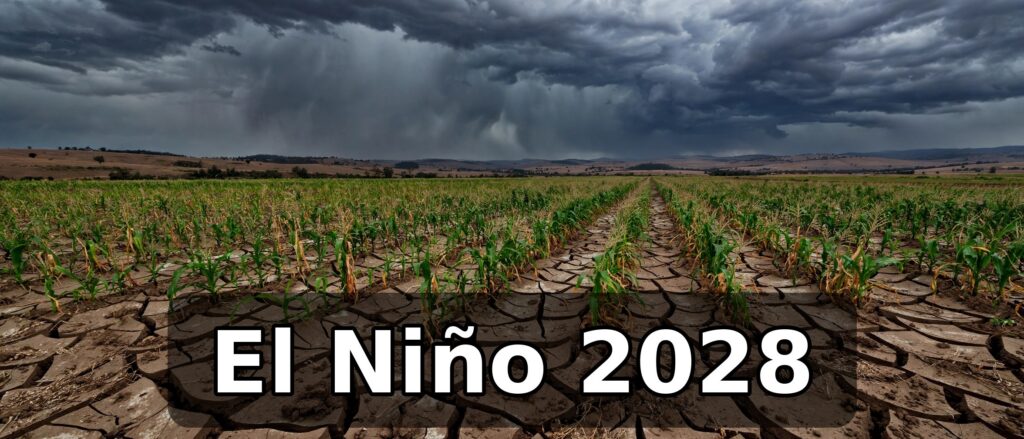
Could a Strong El Niño Push Global Food Prices Higher Through 2028?
The Guardian reports that economic analysts warn a strong El Niño could push global food prices higher through 2028 — a forecast about possibilities, not a confirmed outcome, and the distinction matters.
Key points
- Economic analysts have warned that a strong El Niño could push global food prices higher, with effects stretching through 2028.
- El Niño works through harvests, not directly through prices: drought and floods in major food-producing regions tighten world supply, and depleted stocks let the shock echo for years.
- For prices to stay high through 2028, four conditions would need to line up: a strong event, broad damage to major exporters, low stocks, and trade or policy responses that worsen the shortfall.
- The warning is a forecast about possibilities, not a confirmed outcome — and reporting it as certain risks panic buying, export restrictions and speculation that create the crisis it warned about.
It is one of the most consequential questions in the world food system: if a strong El Niño develops, could it push global food prices higher for years, not just months? Economic analysts have warned of exactly that possibility — that El Niño-driven drought and floods could affect harvests and food prices, with effects stretching through 2028. It is a warning worth taking seriously, and a warning that must be handled with care.
What analysts are describing is a forecast about possibilities, not a confirmed outcome. The difference between those two things is the difference between prudent preparation and false certainty. A forecast gives the world time to prepare. A false certainty can trigger the very harm the forecast warned about.
El Niño is a natural climate pattern, not a single event. It arises when sea surface temperatures in the central and eastern Pacific Ocean rise above normal, shifting rainfall patterns around the world. Some regions that are normally wet become dry; some that are normally dry become wet. The pattern typically lasts for months, and its effects on agriculture unfold over growing seasons, harvest cycles and trade flows.
A strong El Niño does not raise food prices by itself. It does so, if it does so, by disrupting the harvests that feed the world, and those disruptions take time to travel from the field to the checkout.
How El Niño reaches the dinner table
The path from a warm Pacific to a grocery bill runs through farms. In Southeast Asia and Australia, El Niño often brings drier conditions that can reduce rice and wheat production. In parts of Africa, it can bring drought to regions already short of water, threatening maize and other staples. In South America, the picture is mixed: some areas may receive welcome rain while others face flooding that damages crops and infrastructure. In North America, the effects vary by region and season, sometimes easing drought in one area while bringing storms to another.
These regional effects do not add up to a single global harvest. They create a patchwork of shortfalls and surpluses, and the net effect on world supply depends on which crops and which exporting countries are hit hardest. If drought strikes major exporters of wheat, rice or maize at the same time, world supply tightens and prices rise. If the damage is concentrated in countries that consume most of what they grow, the global price effect is smaller, though the local human cost can still be severe.
| Region | Typical El Niño effect | Crops at risk |
|---|---|---|
| Southeast Asia and Australia | Drier conditions | Rice and wheat |
| Parts of Africa | Drought in regions already short of water | Maize and other staples |
| South America | Mixed — welcome rain in some areas, flooding in others | Crops and infrastructure damaged by floods |
| North America | Varies by region and season | Drought eased in one area, storms in another |
Timing matters as much as geography. A harvest failure in one growing season affects prices in the months that follow, but the effect can persist if stocks are drawn down and the next season is also affected. This is how a single climate pattern can cast a shadow over several years: the first bad harvest depletes reserves, the second finds the system with less cushion, and prices stay elevated even after the weather itself has returned to normal.
Analysts warning about effects through 2028 are describing this kind of drawn-out transmission, in which the initial shock echoes through stocks, planting decisions and trade flows.
Why forecasts are not outcomes
It is essential to be precise about what such warnings are. Economic analysts build scenarios: if El Niño is strong, and if it hits certain regions, and if harvests fall by a certain amount, and if trade disruptions compound the shortfall, then prices could rise by a certain range over a certain period. Each “if” is a genuine uncertainty.
El Niño’s strength is not known in advance with certainty. Its regional effects vary from one event to the next. Farmers adapt, planting different crops or changing sowing dates. Governments intervene, releasing stocks or restricting exports. Markets adjust, with buyers switching suppliers and consumers switching foods.
None of this means the warning should be ignored. On the contrary, the value of a forecast lies in the preparation it enables. Countries that hear a warning about possible harvest shortfalls can build up stocks, arrange alternative suppliers and prepare targeted support for vulnerable households before prices rise. Farmers can choose crops and planting strategies that are more resilient to the expected conditions. Aid agencies can pre-position supplies.
The warning is useful precisely because it arrives before the outcome is known — but it must not be reported as if the outcome were already decided. Responsible reporting keeps the language of possibility intact: analysts warn, scenarios suggest, prices could rise. Those hedges are not evasions; they are the honest description of what is known.
What would have to happen for prices to stay high through 2028
For food prices to remain elevated through 2028 as a result of a strong El Niño, several things would need to go wrong in sequence. First, the El Niño itself would need to be strong and to hit major food-producing regions in ways that reduce harvests significantly. Second, the damage would need to be broad enough that no single region’s surplus could compensate — a patchwork of local problems would not be enough; the shortfall would need to touch the crops and countries that set world prices.
Third, stocks would need to be low enough that the shortfall could not be absorbed from reserves. Fourth, trade disruptions or policy responses would need to compound the problem rather than relieve it, for example if major exporters restricted sales to protect their own consumers.
| Condition | What it requires |
|---|---|
| 1. A strong El Niño | Strong warming in the central and eastern Pacific, hitting major food-producing regions hard |
| 2. Broad damage | Shortfalls touching the crops and countries that set world prices, not only local problems |
| 3. Low stocks | Reserves too thin to absorb the shortfall |
| 4. Compounding responses | Trade disruption or export restrictions that worsen the shortage instead of relieving it |
Each of these conditions is possible, and their combination is what analysts are warning about. But it is equally possible that the El Niño is weaker than feared, that its effects fall on regions with less weight in world markets, that harvests elsewhere are strong, or that stocks prove adequate. The range of plausible outcomes is wide, and it narrows only as the event unfolds and harvest data replaces speculation.
A warning that extends through 2028 is not a prediction that prices will rise every month until then. It is an assessment that the effects of a major climate disruption, if it occurs, could take years to work through the system — through depleted stocks, higher input costs and changed planting decisions.
What is still uncertain
The strength of the event is unknown in advance. El Niño’s strength cannot be known with certainty before it develops, and strength is what decides how far its effects reach.
Regional effects vary from event to event. The same pattern can bring drought to one region and rain to another, and the balance changes each time. Which exporters are hit matters more than how many places are affected.
Adaptation can blunt the shock. Farmers change crops and sowing dates, governments release stocks, and buyers switch suppliers. Each of those responses can shrink an effect that looked large in a model.
Policy can help or harm. Export restrictions imposed to protect domestic consumers can tighten world supply further, while stock releases and alternative sourcing can do the opposite. The outcome depends on choices that have not yet been made.
The interaction with a warming world
One further layer deserves attention, and it must be handled with the same care as the forecast itself. El Niño is a natural phenomenon; it is not caused by climate change. But the background against which it operates is warming, and that warming can make its impacts more severe.
A drought that arrives on top of already higher temperatures causes more evaporation and more crop stress than the same drought would have decades ago. A flood that falls on soils degraded by heat and previous extremes causes more damage. The baseline has shifted, even though the pattern itself is natural.
This distinction — natural pattern, worsening context — is the scientifically accurate frame, and it matters for policy. It means that preparing for El Niño is not only about forecasting the Pacific. It is also about the longer-term work of making agriculture more resilient to heat and water stress in general: drought-tolerant crop varieties, efficient irrigation, diversified farming systems and social safety nets that protect the poorest households when prices rise for any reason.
What this means
The danger of collapsing forecast into certainty is real. If a forecast of higher prices is reported as a certainty, consumers may panic-buy, governments may impose export restrictions that worsen the global situation, and speculators may drive prices up in anticipation of a shortage that has not yet occurred. The forecast can become self-fulfilling in the worst way, creating the very crisis it warned about.
Preparation is the point of the warning. Stocks can be built up, alternative suppliers arranged, targeted support prepared for vulnerable households, and resilient planting choices made — all before prices rise. That preparation is only possible while the outcome is still uncertain.
The people most at risk are familiar. Low-income households that spend a large share of their income on food, import-dependent countries with little fiscal room to cushion a shock, and smallholder farmers who are net buyers of food face the sharpest consequences. For them, the difference between a forecast and an outcome is not academic; it is the difference between a warning that enables preparation and a crisis that arrives unannounced.
What should change
Keep the language of possibility intact. Warnings should be reported as warnings — analysts warn, scenarios suggest, prices could rise — so that preparation, not panic, is the response.
Build buffers before the shock. Adequate stocks, diversified suppliers and pre-positioned aid are what turn a bad harvest into a manageable disruption instead of a multi-year price crisis.
Invest in resilience for any reason, not only for El Niño. Drought-tolerant varieties, efficient irrigation, diversified farming and safety nets protect households when prices rise for any cause, including the next climate pattern after this one.
A warning, not a verdict
The honest summary of the analysts’ warning is this: a strong El Niño could, through drought and floods, reduce harvests and put upward pressure on global food prices, and the effects could linger for years as stocks and planting cycles adjust. That is a serious possibility, and it deserves attention and preparation. It is not a confirmed result, and it should not be reported as one.
The future of food prices through 2028 will be decided by the strength of the climate pattern, the resilience of farms, the adequacy of stocks and the wisdom of policy responses — none of which is settled yet. The warning is valuable because it gives the world time to influence those factors before they are decided by events.
Raina





댓글 0
첫 댓글을 남겨보세요.